
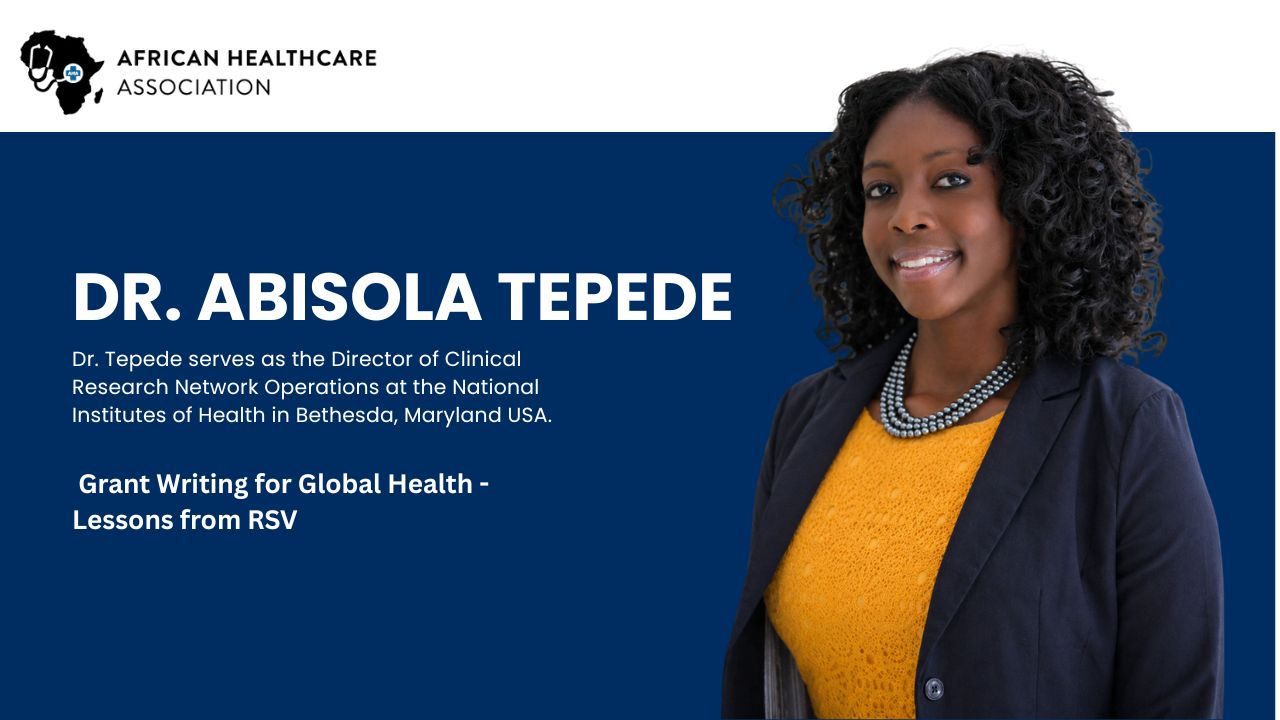
On May 27, 2026, the African Healthcare Association (AHA) hosted a virtual session titled “Grant Writing for Global Health: Lessons from RSV.” The discussion explored both the growing impact of Respiratory Syncytial Virus (RSV) and practical strategies for navigating the NIH grants process and securing research funding.
The session highlighted RSV as one of the leading causes of hospitalization in infants and an under-recognized cause of severe respiratory illness among older adults and immunocompromised individuals. Participants learned that while RSV often presents as a mild respiratory infection in adults, it can also lead to serious complications such as bronchitis, pneumonia, and lower respiratory tract infections, particularly among individuals with asthma, COPD, congestive heart failure, and weakened immune systems.
The presentation also discussed recent advances in RSV prevention, including the historic development of vaccines targeting major respiratory viruses and new monoclonal antibody therapies designed to protect infants during RSV seasons.
A major focus of the session centered on grant writing and the NIH application process as a practical application of support that allows for medical advances like the now available RSV vaccines and treatment. Participants were introduced to important resources such as NIH Matchmaker, Grants.gov, and eRA Commons, while also learning the key characteristics of strong grant applications. Emphasis was placed on developing research proposals that are focused, impactful, well-organized, and supported by clear scientific rationale and relevant data.
The speaker also discussed common weaknesses in grant applications, including lack of focus, unrealistic project aims, insufficient feasibility data, and poor organization or writing quality. Attendees were encouraged to clearly communicate the significance and potential public health impact of their proposed research.
The session concluded with an engaging discussion on RSV vaccine funding and the availability of RSV-related data across African countries. Participants learned that while NIH supports biomedical research and scientific discovery, it does not directly fund RSV vaccines for public distribution. Additional conversations highlighted existing gaps in RSV surveillance and research data across parts of Africa, reinforcing the need for stronger healthcare infrastructure, research collaboration, and equitable access to vaccines and respiratory healthcare.
Although RSV epidemiology and NIH grant writing may appear distinct, the session intentionally brought them together to demonstrate how deep clinical understanding and strategic funding expertise work hand in hand to accelerate breakthroughs in global health.
AHA remains committed to fostering educational discussions that strengthen healthcare knowledge, research capacity, and global health collaboration across Africa and beyond.