

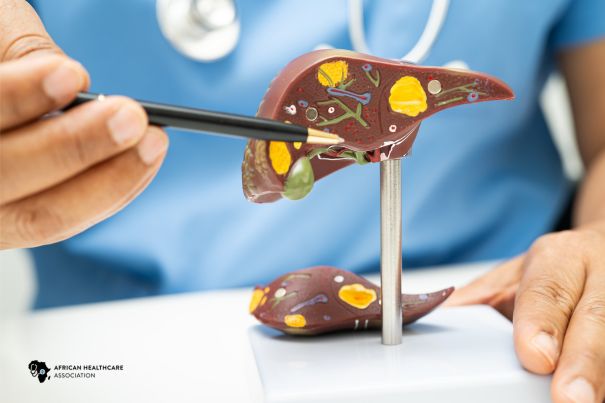
Your liver performs over 500 functions every day. It filters toxins from your blood, produces bile to help digest food, regulates blood sugar, and makes the proteins your body needs to clot properly. It does all of this without drawing attention to itself.
Liver disease changes that.
The term covers any condition that damages or disrupts the liver’s ability to function. Some forms develop quietly over decades. Others arrive suddenly. What they share is this: without treatment, all of them can progress to permanent damage.
This matters everywhere, but it matters with particular urgency across Africa. Liver disease accounts for over two million deaths globally each year, and Africa has among the highest incidence and mortality rates of any region in the world.
| Why This Matters for Africa Africa carries some of the highest rates of liver disease mortality in the world, driven by viral hepatitis, aflatoxin exposure and increasingly, metabolic conditions tied to urbanization and changing diets. Yet access to diagnosis and treatment remains severely limited. This guide is written for everyone, but it is grounded in the reality faced by millions of people in African communities, both on the continent and in the diaspora. |
How Liver Disease Develops
Liver disease may be acute, arriving quickly and sometimes resolving with treatment, or chronic, unfolding over years and, without intervention, producing lasting structural damage.
Chronic liver disease tends to follow a recognizable path. Inflammation comes first, the liver’s response to ongoing injury or infection. With enough repeated damage, fibrosis sets in as scar tissue begins replacing healthy cells. That eventually leads to cirrhosis, where extensive scarring distorts the liver’s architecture and impairs its function in ways that are largely irreversible. The final stage is liver failure or liver cancer, both life-threatening emergencies.
The liver is resilient. It can absorb significant damage before sending any clear signal. That is precisely why liver disease is so often caught late.
Common Types of Liver Disease
Viral Hepatitis (Hepatitis B and C)
Hepatitis B and C are the dominant causes of liver disease in Africa and globally. Both viruses infect liver cells directly and, if left untreated, can lead to cirrhosis and liver cancer over years or decades. Most people feel completely well during this time, which is part of what makes these infections so dangerous.
| 70 million+ Africans living with chronic hepatitis B or C Source: WHO African Region |
According to the WHO Regional Office for Africa, over 70 million Africans live with chronic viral hepatitis. More than 90% of them lack access to the care they need. For African diaspora communities, this is not a distant issue. Many people were infected as children in countries where the virus is widespread and have never been tested.
Fatty Liver Disease (MASLD)
Formerly known as NAFLD, this condition develops when excess fat accumulates in liver cells and triggers inflammation. It is closely linked to obesity, type 2 diabetes and processed food diets. A 2025 review found the prevalence of metabolic-associated fatty liver disease in sub-Saharan Africa to be approximately 29%, slightly above the global estimate. As urbanization accelerates, that figure is expected to rise.
Alcohol-Associated Liver Disease
Excessive alcohol consumption is a leading cause of cirrhosis worldwide. In Africa, it often coexists with viral hepatitis, compounding damage that accelerates the path to advanced disease.
Autoimmune and Inherited Conditions
In autoimmune hepatitis, the immune system attacks healthy liver cells. Inherited conditions including Wilson’s disease and hemochromatosis cause toxic buildups that damage the liver over time. Early screening is the most effective tool against both.
Drug-Induced Liver Injury
Certain medications, herbal remedies and supplements can damage the liver. In African communities, traditional herbal medicines are widely used and culturally significant. Many preparations are safe, but some can cause serious liver injury, particularly when combined with prescription medications. This is a reason to have an open conversation with your healthcare provider, not a reason to avoid herbal medicine entirely.
Signs of Liver Disease
Because the liver can keep functioning even when significantly damaged, symptoms often appear only after considerable harm has already been done. Common warning signs include:
- Fatigue and weakness that does not improve with rest
- Jaundice, yellowing of the skin and whites of the eyes
- Abdominal pain or swelling, particularly in the upper right side
- Swollen legs and ankles
- Dark, tea-colored urine
- Pale or clay-colored stools
- Nausea, loss of appetite, and unintentional weight loss
- Easy bruising or bleeding
- Persistent itchy skin
- Confusion or difficulty concentrating in advanced disease
| Early Liver Disease Often Has No Symptoms Many people with hepatitis B, hepatitis C or early fatty liver disease feel completely well for years. This is why screening matters, especially if you have risk factors or come from a region where liver disease is common. Knowing your status is the first step. |
Who Is at Risk
Liver disease can affect anyone, but certain factors significantly increase the risk:
- Hepatitis B or C infection is the leading cause of liver disease in Africa and globally
- Heavy or prolonged alcohol use
- Obesity and type 2 diabetes are the primary drivers of fatty liver disease
- Aflatoxin exposure, a toxin from mold on improperly stored grains and peanuts, prevalent in parts of sub-Saharan Africa and strongly linked to liver cancer
- Family history of liver disease
- Mother-to-child transmission of hepatitis B, a major route of infection across sub-Saharan Africa
| A Note for the African Diaspora If you were born in or have family roots in sub-Saharan Africa, your risk of hepatitis B exposure is meaningfully higher than the general population in most high-income countries. A simple blood test can tell you whether you carry the virus, and if you do, effective treatment is available. Ask your doctor about hepatitis B screening. |
Diagnosis and Treatment
Because liver disease can be asymptomatic for years, diagnosis often begins with routine blood work. Liver function tests measure liver enzymes, bilirubin, and clotting factors. Hepatitis serology detects hepatitis B and C. Ultrasound can identify fatty liver, cirrhosis, and masses, and is widely available in many African healthcare settings. FibroScan measures liver stiffness without a biopsy.
Treatment depends on type and stage. Hepatitis B can be suppressed with antivirals. Hepatitis C is now curable with a short course of direct-acting antivirals at over 95% success rates. Early fatty liver disease can be significantly improved through weight loss, exercise, and diet changes. Autoimmune hepatitis is managed with immunosuppressive medications. For cirrhosis, treatment focuses on managing complications and, where accessible, liver transplantation.
The gap between available treatment and actual access remains stark. Only 3% of Africans with hepatitis C have received treatment, largely because of cost and the absence of hepatitis medications in many national health systems. The treatments exist. The gap is access.
Prevention
For many of the most common types of liver disease, prevention is genuinely possible.
- Vaccinate against hepatitis B. A safe, effective vaccine is available. Vaccination of newborns within 24 hours of birth is the most powerful preventive measure.
- Get tested. Knowing your hepatitis B and C status is the starting point. Early diagnosis makes treatment possible before serious damage occurs.
- Limit alcohol. Staying within recommended limits meaningfully reduces the risk of alcohol-associated liver disease.
- Manage your metabolic health. Addressing obesity, diabetes, and blood sugar control significantly lowers the risk of fatty liver disease.
- Store food properly. In regions where aflatoxin is a concern, correct storage of maize, groundnuts, and other staple crops reduces exposure to one of the most potent liver carcinogens.
The Bottom Line
Liver disease is one of the most significant and most underappreciated health challenges in the world. Millions of people are living with liver damage right now without knowing it. Across Africa, that burden is disproportionately high, and the gap between the scale of the problem and available resources remains wide.
But the liver can recover when given the chance. Early screening, vaccination, treatment, and lifestyle change genuinely transform outcomes. If you have risk factors, talk to a healthcare provider. Ask about hepatitis B and C testing. And share what you learn, because in communities where liver disease is often caught too late, awareness itself saves lives.
