
Home / Events / Monthly Speaker Series / February 2026
We invite you to join AHA for our conversation on malaria and the changing climate. A grounded look at what a shifting environment means for mosquito biology, transmission, and the public-health systems responding on the ground.
ABOUT THIS SESSION
Malaria remains one of the most consequential public-health challenges across Africa, and climate change is quietly reshaping the map: new geographies for the mosquito, longer transmission seasons, and shifting community risk profiles that older playbooks were not built for.
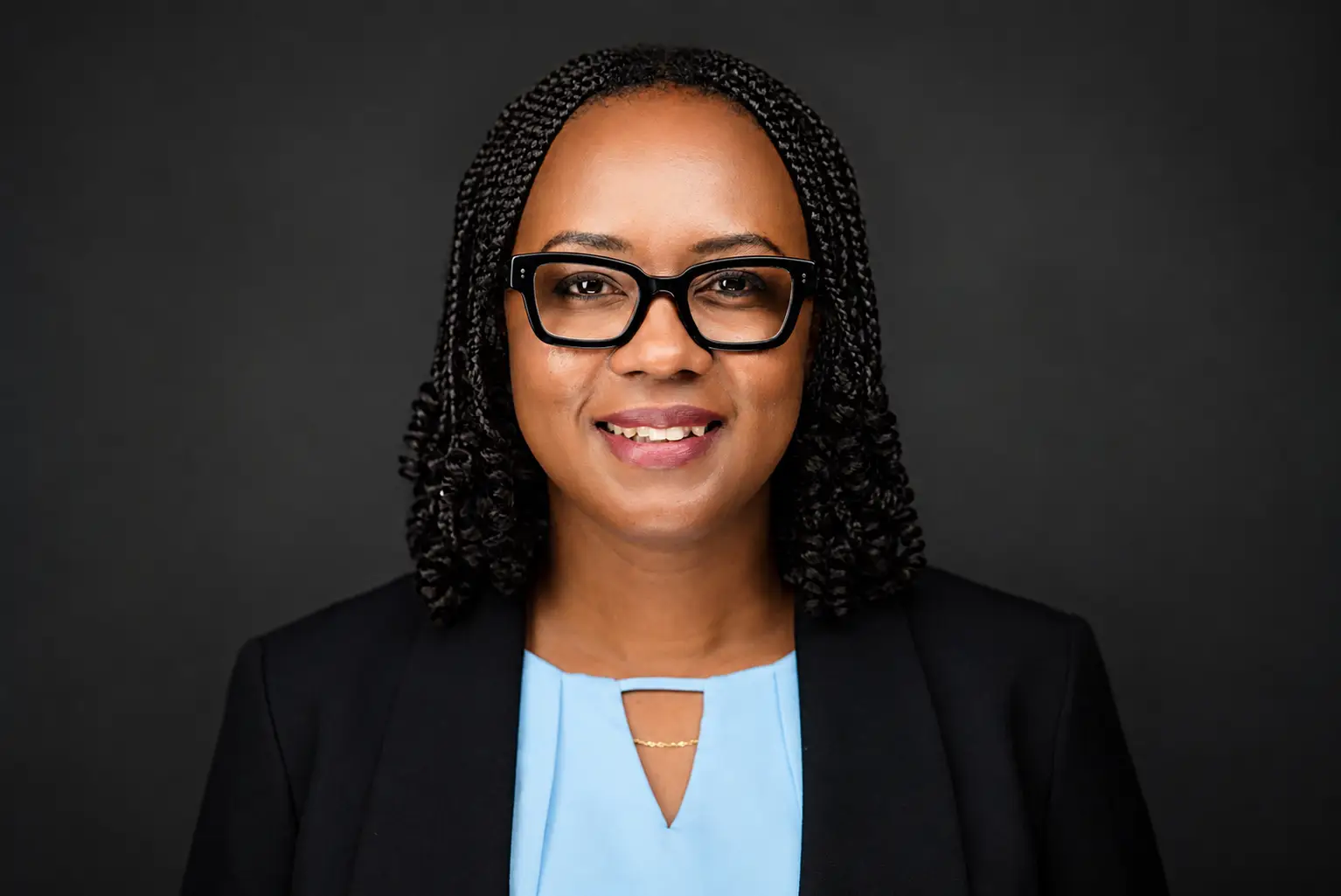
In this session, Dr. Henriette Balinda walks through what current science tells us about malaria in a warming climate, what public-health systems are learning as they respond, and why community-based adaptation may be the most durable path forward.
Clinicians, public health professionals, environmental health researchers, and community leaders are invited to join the discussion.
FEATURED SPEAKER
A PhD cancer biologist and MPH candidate bridging tumor biology, translational science, and public health.

Dr. Henriette Balinda is a PhD-trained cancer biologist and translational scientist with expertise in tumor biology, immunotherapy, and the tumor microenvironment. Her research focuses on how cancer cells interact with the immune system and how therapies — including radiation, DNA damage response inhibitors, and immune checkpoint blockade — can be combined to improve treatment outcomes.
She currently serves as a Senior Research Scientist at the Mays Cancer Center at UT Health San Antonio, where she leads translational oncology projects and integrates advanced technologies such as flow cytometry, CyTOF, and single-cell RNA sequencing. She is also completing an MPH in Public Health Practice & Administration, deepening her expertise in public health systems, health policy, and community-based strategies.
Her background weaves together laboratory-based biomedical research, translational science, and public-health communication — giving her a rare vantage point on how bench science becomes lived reality for African communities navigating shifting infectious-disease patterns.
Beyond the lab, she has trained and mentored doctoral students, undergraduate researchers, and laboratory staff across multiple institutions, and contributes to scientific communications through Feat Healthcare — developing manuscripts, presentations, and thought leadership content for healthcare professionals and industry stakeholders. She joins AHA as the Featured Speaker for the February 2026 Monthly Speaker Series.
WHAT WE WILL DISCUSS
Grounded in the science, built for the community. Here is what Dr. Balinda walked through in the session.
A grounding in the biology of malaria — the parasite, the mosquito vector, and the transmission cycle that shapes everything that follows.
Temperature, rainfall, and humidity have moved. What the science says about how that is reshaping mosquito habitat, biting behavior, and where transmission is now possible.
Surveillance, prevention programs, and case management were built for a specific climate reality. What has to shift now, and where systems are learning fastest.
The most resilient responses are built with the communities most affected. Practical models for community-based adaptation and why they outperform top-down responses in a shifting climate.
EVENT DETAILS
RESERVE YOUR SEAT
Questions about this session? Email info@africanhealthcareassociation.com or call +1 (800) 951-1265.
Questions about this session?
Email info@africanhealthcareassociation.com or call +1 (800) 951-1265